


Coastal living comes with undeniable appeal. The proximity to the ocean, the quality of light, and the lifestyle that comes with a premium address along San Diego's coastline. From La Jolla to Del Mar, Pacific Beach to Coronado, and Encinitas to Oceanside, owning a home in these sought-after neighborhoods means understanding how the environment affects property differently than inland homes.
Salt air isn't just an aesthetic concern that regular cleaning can address. The corrosive nature of ocean air creates ongoing structural challenges that directly impact window performance and longevity. Most coastal homeowners don't discover the extent of salt damage until they're facing expensive repairs or total replacement. In this guide, we'll cover what's actually happening to window systems and which solutions protect investments for the long term.
What Salt Air Actually Does to Your Windows

Salt air creates challenges that your standard window systems weren't designed to handle. Recognizing how salt affects your windows helps you decide whether replacement makes more sense than ongoing maintenance.
How Salt Particles Etch and Damage Glass
Airborne salt crystals settle on your glass surfaces and bond beyond simple surface residue. When coastal moisture meets these particles, a chemical reaction gradually alters your glass itself. You'll notice a cloudy film that won't budge, no matter how much you scrub or how many times you call your window cleaner. Over time, you might see:
- Permanent haziness that resists every cleaning solution you try
- Reduced clarity that makes your natural light look diffused
- Diminished views that affect what you valued most about your property
The process sneaks up gradually, so you might not catch the damage until it becomes obvious enough to block the coastal views you chose this home for.
Frames and Hardware Corrode Faster
Salt-laden air attacks the metal components throughout your window system, accelerating oxidation far beyond normal wear. Your aluminum frames develop pitting and corrosion that starts as a cosmetic issue but quickly goes deeper. Operating hardware stiffens over time, making your windows harder to open or close. Locking mechanisms fail, compromising your home's security and your windows' seal against the elements. Once corrosion eats into the metal, replacement becomes your only real solution.
Moisture Intensifies Salt Damage
San Diego's coastal humidity accelerates the salt damage your windows face dramatically. Marine layer moisture keeps salt deposits active on your glass instead of letting them dry out harmlessly. This gives salt more time to eat away at your surfaces day after day. High humidity also breaks down your window seals and weatherstripping faster than you'd expect. When these seals fail, moisture sneaks between your dual-pane glass units and creates permanent fogging that ruins both your insulation and the views you're paying a premium for.
Screen Trap Salt And Blows Back Into Glass
Your window screens create an unexpected problem in coastal areas. Instead of filtering salt away, your screens catch particles and hold them right against your glass and frames. Wind pushes this buildup back onto the surfaces you just had cleaned. You've probably noticed your screens look worse than your glass, showing:
- Heavy white salt deposits you can't ignore
- Discoloration throughout the mesh
- Material breakdown that weakens the structure
Cleaning your windows without tackling the screens just restarts the cycle, leaving you wondering why the salt keeps coming back, no matter what you do.
Early Warning Signs Your Windows Are Suffering from Salt Air Damage
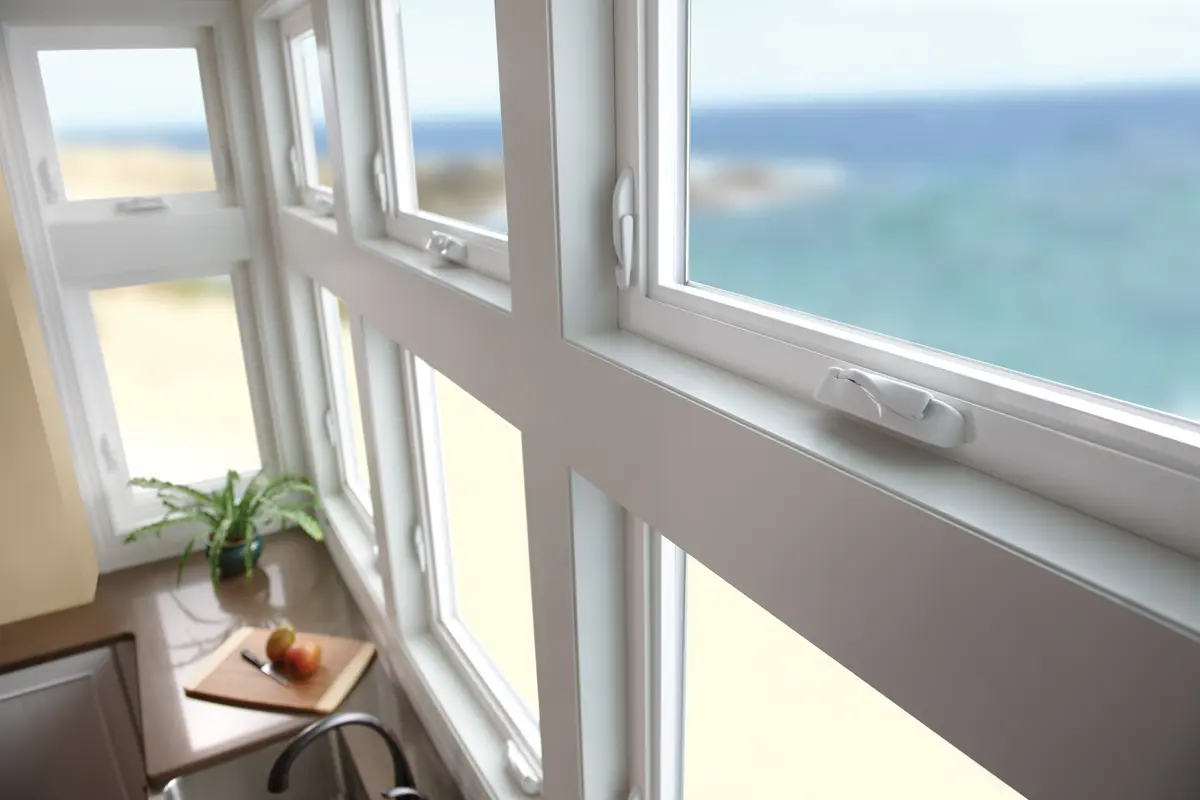
Catching salt air damage early can save you from more extensive repairs down the line. Your windows will typically show specific symptoms before the deterioration becomes severe. Pay attention to these indicators, especially if your home sits close to the coastline:
- Chalky white residue that keeps returning: You clean your windows, and within days, that white film is back. This persistent buildup signals active salt deposits bonding to your glass and frames.
- Cloudiness that won't wash away: If your glass looks hazy even after thorough cleaning, you're likely seeing etching rather than surface dirt.
- Stiff or sticky window operation: When your windows become harder to open, close, or lock, corrosion is affecting the hardware and tracks.
- Visible corrosion on frames or hardware: Pitting, discoloration, or white powdery substances on your aluminum frames indicate oxidation is already underway.
- Deteriorating weatherstripping: Cracked, peeling, or brittle weatherstripping around your windows means the seals are breaking down.
- Fogging between glass panes: Permanent condensation trapped inside your dual-pane windows means the seal has failed.
Most homeowners dismiss these signs as normal wear, but in coastal environments, they represent accelerating damage that compounds over time. Addressing these symptoms early gives you more options than waiting until replacement becomes your only choice.
Which Window Materials Are Most Vulnerable to Salt Air Corrosion?
Not all window materials handle coastal conditions equally. Knowing which materials struggle in salt air helps you evaluate what's protecting your home right now and what might serve you better long-term.
Aluminum Frames
Aluminum oxidizes rapidly when salt particles and coastal moisture hit the surface. You'll see visible pitting and white corrosion develop across the frames. While aluminum offers affordability, it demands constant attention in coastal zones. Once corrosion pushes past the surface coating, the frame's structural integrity starts breaking down.
Wood Windows
Wood windows bring classic beauty but require serious upkeep near the ocean. Salt air and humidity team up to accelerate rot, swelling, and warping. The protective paint or sealant degrades faster under salt exposure, leaving the wood vulnerable to moisture damage. Coastal homeowners often find themselves repainting or refinishing more often than expected.
Builder-Grade Vinyl Frames
Generic budget vinyl windows from lesser-known manufacturers can become brittle over time when exposed to constant UV rays and salt air. Lower-quality formulations may discolor, crack, or chalk, particularly on sun-facing exposures. These economy options often use thinner material and less sophisticated UV stabilizers that break down faster in demanding coastal conditions.
Why Choose Window Replacement Instead of Window Cleaning?
Regular cleaning removes surface salt deposits, but it cannot reverse the chemical damage already embedded in your glass and frames. That persistent cloudiness you see after every professional cleaning represents permanent etching that has altered the glass at a molecular level. Corroded hardware, failed seals, and degraded weatherstripping continue to deteriorate regardless of how often you schedule maintenance. Coastal homeowners who rely solely on cleaning find themselves paying repeatedly for temporary cosmetic improvements while the underlying structural problems accelerate.
Replacement addresses the actual problem by installing materials specifically engineered for salt air environments. Modern coastal-grade windows feature advanced vinyl formulations with UV stabilizers, corrosion-resistant hardware, and seal technology designed to withstand the humidity that destroys older systems. Cleaning offers a Band-Aid solution that delays the inevitable. Replacement gives your coastal home the protection it actually needs to perform long-term without constant intervention.
Best Window Types and Materials for San Diego Coastal Homes
Your coastal property deserves windows built specifically to handle salt air rather than merely tolerate it. The materials below deliver long-term performance in San Diego's oceanfront conditions without compromising your views or natural light.
Premium Vinyl Windows
Premium vinyl windows built for coastal environments use advanced PVC formulations with high-grade UV stabilizers and titanium dioxide additives. These materials resist the brittleness and discoloration that plague budget vinyl options, maintaining their structural integrity and appearance even under constant salt exposure. The non-corrosive nature of quality vinyl means your frames won't pit or oxidize like metal alternatives. The low maintenance requirements align perfectly with the coastal lifestyle you invested in.
Fiberglass Frames
Fiberglass represents the premium choice for oceanfront properties facing the most severe salt air exposure. The material combines glass fibers with resin to create frames that remain dimensionally stable regardless of temperature swings or direct salt contact. Fiberglass won't corrode, warp, swell, or rot, making it exceptionally durable for homes within direct view of the ocean. The strength of fiberglass also allows for thinner frame profiles, which maximizes your glass area and preserves those panoramic coastal views.
Impact-Resistant and Low-E Glass
The glass itself matters just as much as the frame material. Impact-resistant glass provides protection against flying debris during Santa Ana wind events while also deterring break-ins. Low-E coatings reflect infrared light to keep heat out without blocking the natural light that makes coastal homes so desirable. These coatings also provide an additional barrier against UV degradation, protecting both your windows and your interior furnishings from sun damage.
Corrosion-Resistant Hardware Systems
Even the best frames and glass lose effectiveness if the hardware fails. Coastal-grade windows feature stainless steel or specially coated hardware designed to resist oxidation in salt-heavy environments. Multi-point locking systems provide superior security while distributing stress evenly across the frame. Quality hardware ensures smooth operation over decades, preventing the stiffness and seizure that plague standard window components exposed to ocean air.
Choosing the Right Window Replacement Partner for Coastal San Diego Homes

Your coastal home deserves more than generic solutions and cookie-cutter recommendations. US Window & Door has spent decades understanding San Diego's unique coastal conditions, from the intense salt exposure of oceanfront properties to the more subtle effects reaching homes miles inland. We know your neighborhood because we've protected homes just like yours for over 30 years, whether you're steps from the shore in Coronado or nestled in the coastal hills of Encinitas. Our team walks alongside you through every decision, offering the kind of insight that only comes from installing thousands of window systems across San Diego's diverse coastal communities.
We begin with a personalized consultation at your home, assessing your specific salt exposure and performance needs. You'll receive honest guidance on which materials truly perform in your location, backed by real experience rather than sales pressure. Many San Diego homeowners choose us because we bring specialized coastal expertise that prevents the installation mistakes we've seen compromise even premium windows. Schedule your free consultation with US Window & Door today and discover why your neighbors trust us to protect their coastal investments with windows built to last.
.jpg)